
The WooCommerce CRO Checklist Every Agency Should Use
A useful WooCommerce conversion rate optimization process is more than changing button colors or adding urgency messages. Agencies need a repeatable checklist that connects customer


A useful WooCommerce conversion rate optimization process is more than changing button colors or adding urgency messages. Agencies need a repeatable checklist that connects customer

Recommendations and personalization are related WooCommerce capabilities, but they solve different problems. A recommendation selects products, content, or offers that may be relevant to a
A WooCommerce store can improve conversion rates when it turns shopper behavior into useful search and merchandising decisions. The goal is not to track every
A useful WooCommerce search experience starts with a deliberate product model. Before importing products into Weaviate, decide which product facts should be searchable, which should
WooCommerce products are rarely organized by one flat label. A product can belong to a hierarchy of categories, have one or more brands, and expose

Retrieval-augmented generation (RAG) adds a retrieval layer between a user’s question and an AI model. Instead of asking a model to rely only on its
In Elasticsearch, choosing between text and keyword fields directly affects how WooCommerce product data is searched, filtered, sorted, and aggregated. The distinction is especially important
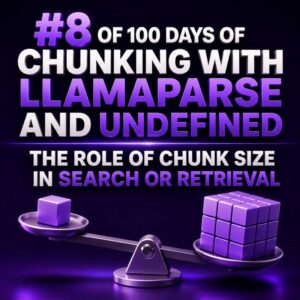
Chunk size is one of the highest-impact configuration choices in a retrieval-augmented search system. It determines how much text is embedded and returned as a
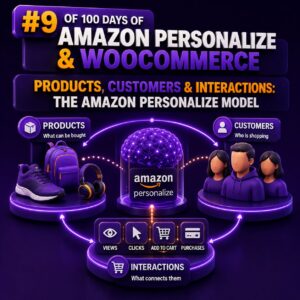
Amazon Personalize uses three core data concepts to understand an ecommerce catalog: users, items, and interactions. For a WooCommerce implementation, these map closely to customers,
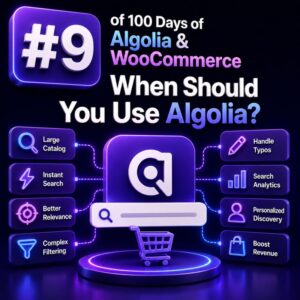
Algolia is most useful when WooCommerce search is a core part of the buying journey rather than a secondary navigation feature. It can provide fast,

For a WooCommerce chatbot, understanding product intent means identifying what a shopper is trying to accomplish—not merely matching the words in a message. A request

A higher-converting WooCommerce store is rarely created by changing one button color or adding more promotional banners. Conversion rate improves when the entire buying journey

Personalization changes more than the products a shopper sees. It can alter how a customer discovers a store, evaluates products, completes checkout, and returns for
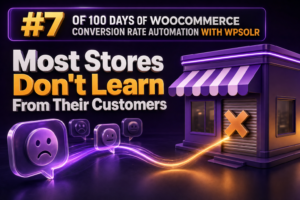
Most WooCommerce stores collect customer signals but rarely turn them into decisions. Search queries, zero-result searches, filter usage, product comparisons, cart removals, support questions, reviews,

In Weaviate, a collection is the top-level container for a type of object. For a WooCommerce agency, a collection might represent products, product documentation, orders,
WooCommerce categories carry more than display metadata. They provide a stable way to filter products, build landing pages, generate facets, and preserve the structure of

A WooCommerce retrieval-augmented generation (RAG) pipeline combines store data retrieval with an AI model so answers are grounded in products, orders, policies, and operational documentation.
Field types determine how Elasticsearch indexes WooCommerce data and what operations are available at query time. A product name needs full-text analysis, while a SKU
Chunking should begin with an understanding of the elements in a document, not with an arbitrary character limit. For a WooCommerce agency, this distinction matters

Amazon Personalize is built around three core data sets: Interactions, Users, and Items. For a WooCommerce agency, understanding how these data sets relate is more
WooCommerce stores commonly start with database-backed search and later add Algolia when shoppers need faster, more relevant product discovery. These systems solve related problems, but

A production WooCommerce AI chatbot is not simply a chat interface connected directly to the store database. It is an application layer that coordinates conversation

Amazon Personalize does not need your entire WooCommerce database. It needs a well-structured record of interactions between shoppers and products, with optional product and customer
The decision to use one Algolia index or several should follow the search experience, data boundaries, and operational requirements of the WooCommerce store. It should
A WooCommerce AI chatbot should begin as a narrowly scoped commerce assistant, not as an unrestricted agent with access to every store operation. The first
WooCommerce product search often fails for reasons that have little to do with the catalog itself. Customers search with use cases, attributes, compatibility requirements, and
AI chatbots are changing WooCommerce shopping by moving customers from keyword-based browsing to guided, conversational buying journeys. Instead of asking shoppers to navigate categories, filters,
WooCommerce agencies often start with the same question when building an AI assistant: should the model retrieve information from the store, or should it be
WooCommerce agencies often treat conversational shopping and site search as interchangeable because both help customers find products. They solve different problems, however. Traditional search is
Retrieval-augmented generation (RAG) is an architecture that gives a large language model access to relevant business data at request time. Instead of relying only on
An AI chatbot for WooCommerce is a conversational software system that helps shoppers interact with an online store using natural-language messages. It can answer product

Revenue growth in WooCommerce is often available in small improvements rather than a complete redesign. For agencies, the most effective changes are usually measurable, low-risk

The placement changes the job In WooCommerce, recommendations are often treated as a single component: a row of products below the product description. That limits
Why on-site search deserves conversion attention In a WooCommerce store, a visitor who uses search has already expressed intent. They are not casually browsing a
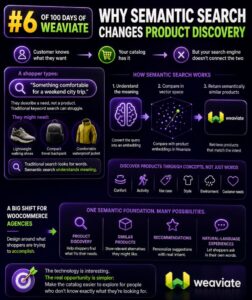
Search That Understands Shopping Intent Traditional WooCommerce search usually matches the words in a query against product titles, descriptions, SKUs, categories, and attributes. That works

Model the Product Data Before You Rank It WooCommerce product data usually arrives as a combination of post fields, taxonomy terms, custom attributes, and variation

Define the product document before indexing A reliable WooCommerce search experience starts with a deliberate Elasticsearch document structure. Do not send the entire wp_posts row
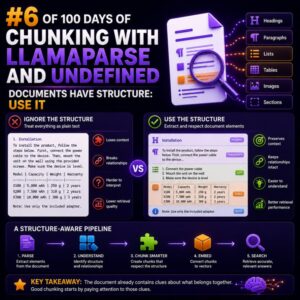
Why flat text creates weak search results WooCommerce projects depend on documents whose meaning is tied to structure. A return policy, product catalog, installation guide,
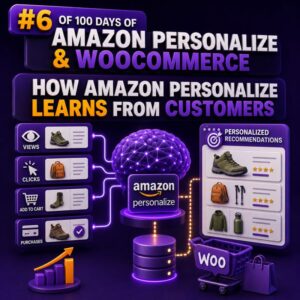
Customer behaviour is the training signal Amazon Personalize does not understand a WooCommerce catalogue or customer base automatically. It learns from the interaction records, user
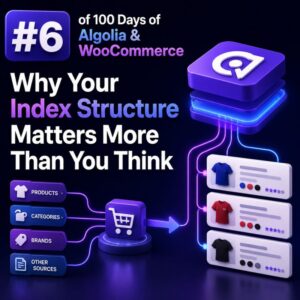
Index structure is a search decision, not a database export For a WooCommerce store, an Algolia index should be designed around the questions shoppers ask,

Start With Evidence, Not Assumptions WooCommerce conversion problems are rarely caused by one obvious issue. A slow checkout, unclear shipping costs, payment failures, or a

The merchandising problem behind missed sales A WooCommerce store that shows the same products, sorting, promotions, and recommendations to every visitor is treating different buying

Clicks Are Behavioral Data, Not Just Traffic In a WooCommerce store, a click is often the first measurable indication that a shopper has found something
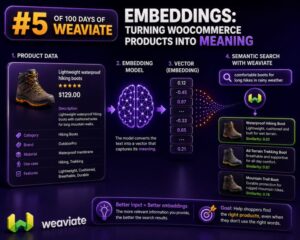
Why product data needs more than keywords WooCommerce search usually starts with exact fields: product title, SKU, attributes, categories, and description. That works when a

Start with a search contract A WooCommerce product object contains far more information than most search experiences need. Before creating a Vespa schema, define which
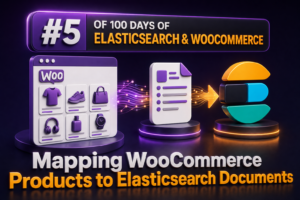
Why the WooCommerce-to-Elasticsearch mapping matters A WooCommerce product contains much more than a name and price. It may include SKUs, descriptions, taxonomies, attributes, stock state,
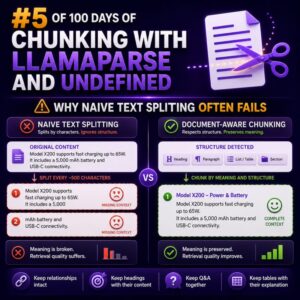
Why Naive Text Splitting Often Fails Text chunking is easy to underestimate. A WooCommerce agency may take product descriptions, documentation, support articles, and store policies,
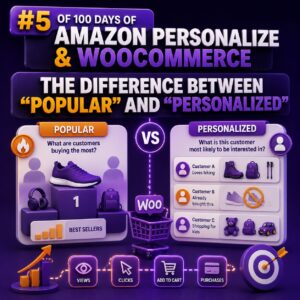
Why the Distinction Matters “Popular” and “personalized” recommendations can look similar in a WooCommerce storefront, but they answer different questions. Popular: Which products are receiving