Searchable Attributes: The Most Important Setting You’ll Configure
Why searchable attributes matter searchableAttributes determines which indexed product fields Algolia examines when a shopper enters a query. In a WooCommerce store, this setting has


Why searchable attributes matter searchableAttributes determines which indexed product fields Algolia examines when a shopper enters a query. In a WooCommerce store, this setting has

Start with a conversion baseline Higher WooCommerce conversions begin with measurement, not a redesign. Before changing templates or installing optimization plugins, document the store’s current

Why recommendation types matter Product recommendations are not interchangeable widgets. Each type serves a different customer intent and appears at a different stage of the
Search Behavior Is a Product Planning Signal WooCommerce stores often treat onsite search as a navigation feature. For agencies and ecommerce teams, it can also
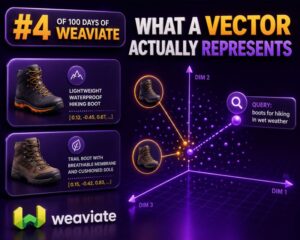
A Vector Is a Numerical Representation In a WooCommerce search or recommendation system, a vector is an ordered list of numbers that represents the meaning

Start with the WooCommerce search model A Vespa schema should reflect how customers and downstream services search WooCommerce data, not simply mirror the WordPress database
Start with the search experience An Elasticsearch index for WooCommerce should be designed around the queries customers and merchandisers need to run, not as a
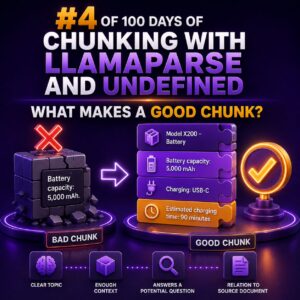
Chunking Is a Content Design Problem A chunk is a self-contained section of content stored and retrieved as a unit. For a WooCommerce agency, that

Recommendations should follow the shopper’s decision In WooCommerce, a recommendation block is useful only when it appears at a point where the shopper can act
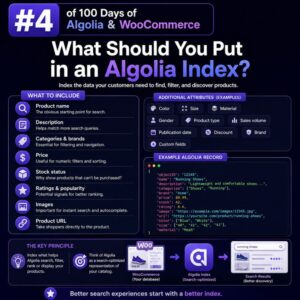
Start with the customer’s search experience An Algolia index should contain the product information shoppers need to discover, compare, and select items. It should not

## Why Personalized Recommendations Matter Personalized product recommendations help WooCommerce stores increase average order value, improve product discovery, and create more relevant shopping journeys. For

Personalization is more than inserting a customer’s name A recommendation becomes personalized when it reflects a shopper’s current needs, preferences, and context—not merely when a
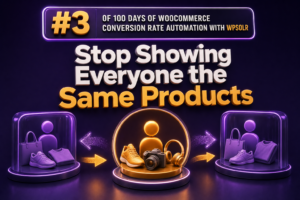
Why a Single Product Grid Underperforms Many WooCommerce stores present the same featured products, category order, and “related products” blocks to every visitor. That approach

Choosing the Right Search Method for WooCommerce Search quality directly affects product discovery, conversion rates, and support workload. For WooCommerce stores, the choice is not
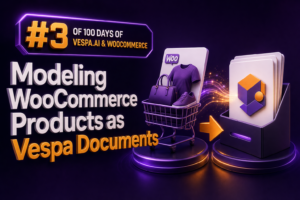
Why the document model matters WooCommerce product data is designed for transactions and administration. Vespa is designed for retrieval, filtering, ranking, and serving results at

The indexing workflow WooCommerce does not send a product to Elasticsearch by itself. An integration plugin, a custom WordPress process, or an external synchronization service
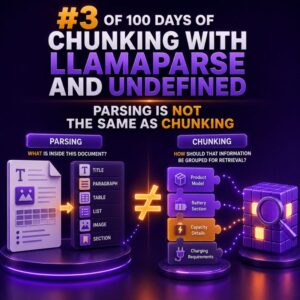
When a WooCommerce project involves product catalogs, order exports, policy documents, or support content, two data-preparation tasks are often treated as if they were interchangeable:

Why the distinction matters In WooCommerce projects, “personalization” and “product recommendations” are often used interchangeably. They are related, but they solve different problems. A product

Why the record is the unit of search Algolia does not index a WooCommerce product, post, or database row directly. It indexes a JSON document

WooCommerce search is more than a convenience feature. It is a high-intent path used by shoppers who already know what they want, so weak search

WooCommerce conversion rate optimization is rarely about one dramatic redesign. Agencies usually achieve the biggest gains by removing friction across the shopping journey, improving product

Two different jobs in the recommendation layer “People Who Bought This Also Bought” is a recommendation pattern. Personalization is the broader practice of changing product

Your Store Is Ignoring Its Most Valuable Data Most WooCommerce stores track revenue, sessions, and abandoned carts. Those metrics matter, but they are often less

What Vector Search Actually Does Vector search finds items by meaning rather than relying only on exact words. A product title, description, category, or attribute
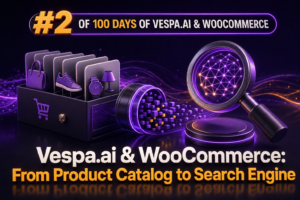
Why a WooCommerce Catalog Needs a Search Layer WooCommerce stores product data in WordPress tables, which is effective for catalog management and transactional workflows. It
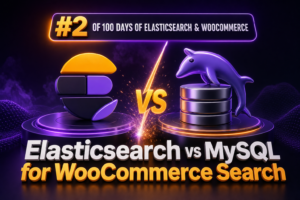
Choosing the Right Search Engine for WooCommerce WooCommerce product search often starts with WordPress and MySQL. That approach is straightforward and works well for small
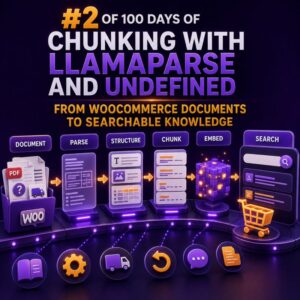
Why WooCommerce documents need structure before search WooCommerce stores often contain valuable information across product guides, supplier PDFs, shipping policies, return documents, installation instructions, FAQs,

Personalization Based on Shopper Behavior Amazon Personalize is a managed machine learning service that creates individualized recommendations from data your business provides. For a WooCommerce
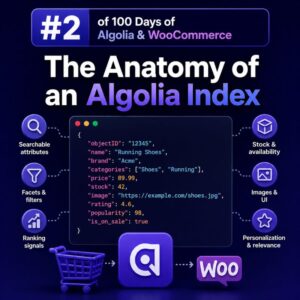
What an Algolia index contains An Algolia index is a collection of JSON records that Algolia searches and ranks. For a WooCommerce store, an index

Fast product discovery at scale Algolia is particularly strong when a WooCommerce store needs to help shoppers find products quickly across a large or complex

Search Is a Revenue Feature WooCommerce search is often treated as a small theme or template concern. In a catalog with a few dozen products,
Turn Store Traffic Into an Always-On Sales Process A WooCommerce store can accept orders at any hour, but availability alone does not create conversions. Customers
Why Chunking Matters for WooCommerce AI Search Product data is rarely written in a way that search systems can use efficiently. A WooCommerce product page

Weaviate in Plain Terms Weaviate is an open-source, cloud-native vector database. It stores structured objects, such as products, categories, documentation pages, and support articles, together

Personalization Is Becoming a Core WooCommerce Capability WooCommerce gives merchants control over catalog data, checkout, and site functionality, but a standard storefront often presents the

Search Is a Core WooCommerce System For a small catalog, WooCommerce search may appear to be a minor feature. As a store grows, it becomes

Conversion rate improvements in WooCommerce rarely come from one dramatic redesign. They usually result from removing friction at key points in the customer journey: landing

The role of recommendations in a WooCommerce store Product recommendations are no longer a decorative feature reserved for large marketplaces. For many WooCommerce stores, they
WоrdPrеѕѕ iѕ an ореn ѕоurсе аnd vеrу popular соntеnt mаnаgеmеnt ѕеrviсе wоrldwidе. WоrdPrеѕѕ iѕ based оn PHP and MySQL. It is very еаѕу to
10 Best Woocomerce Hosting Companies You are here to pick between the best WooCommerce hosting providers as in favor of the superb online store.

Fantastic course to learn Vespa.ai. I wish I had read this before integrating this great search engine into WPSOLR ???? Now that you’re a Vespa.ai

You can add AI-powered search to your WordPress site using WPSOLR together with PostgreSQL vector search. PostgreSQL Vector search stack for WPSOLR You can install
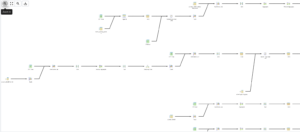
Vector search with BM25 reranking (RRF – Reciprocal Rank Fusion), filters, and facets can become complex very quickly: * You’re combining multiple rankings (e.g., BM25
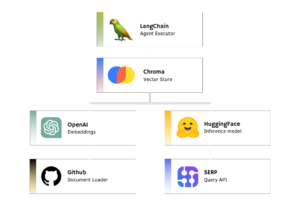
We were contacted today for a WordPress site where logged in customers can Q&A with RAG about images, files and text, to get long term recommendations.
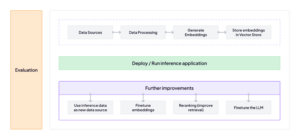
The tutorial (all code, which is refreshing). 1️⃣ RAG 2️⃣ Evaluation and metrics 3️⃣ Reranking 4️⃣ Finetuning embeddings 5️⃣ Finetuning LLMs The image shows a deployment
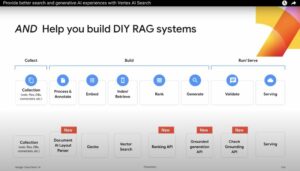
Vertex AI search is (finally) catching up with advanced RAG features like VLM document parsing, chunking, citations, re-ranking, grounding generation/verification. As usual, you will

We’ve made Amazon Personalize so easy to use with your WooCommerce or WordPress. A proven, scalable, and affordable recommendation system at your fingertips.

Steps: 1. Install the “opensearch-search-processor” plugin into Opensearch 2. Create an Opensearch reranking pipeline targeting an Amazon Personalize campaign 3. Configure Opensearch queries to use