The Most Important Data for a Recommendation Engine
A recommendation engine is only as effective as the data it can trust. For WooCommerce stores, the highest-value inputs are not limited to product views


A recommendation engine is only as effective as the data it can trust. For WooCommerce stores, the highest-value inputs are not limited to product views
Most shoppers arrive at a WooCommerce store with a specific goal. They may search for a product name, a compatibility requirement, a size, a material,

Product availability changes are one of the easiest ways for a WooCommerce search experience to become misleading. A product can be deleted from WooCommerce, hidden

Large WooCommerce catalogs should not be loaded into Vespa with one request per product and no coordination. That approach is slow, difficult to resume, and

Product data is rarely stored as one clean, self-contained document. A WooCommerce product may include a title, short description, long description, attributes, variations, dimensions, stock
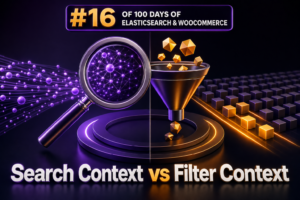
Elasticsearch evaluates clauses in two different ways: query context determines how well a document matches, while filter context determines whether a document matches at all.

Document chunks are much more useful when they carry the metadata needed to identify, filter, and prioritize them. For a WooCommerce agency, a chunk from

Product pages are one of the highest-value locations for recommendations in a WooCommerce store. A shopper viewing a specific product has already demonstrated intent, so
For a WooCommerce search implementation, the choice between incremental indexing and a full reindex affects deployment time, search freshness, API usage, and operational risk. Most

WooCommerce chatbots can answer product, order, shipping, and returns questions at scale, but an incorrect answer can create support costs, compliance problems, or a failed
Product attributes are one of the most useful sources of structured context for WooCommerce retrieval-augmented generation (RAG). They describe characteristics such as material, size, compatibility,

Faceted navigation is essential in WooCommerce stores, but product filters should not accidentally change the order of otherwise relevant results. A customer searching for “running

WooCommerce catalogs often contain the information customers need most in lists: ingredients, compatible models, included accessories, care instructions, dimensions, and technical specifications. If a document

A personalized homepage can turn a WooCommerce store’s first screen into a relevant merchandising surface. Instead of showing the same products to every visitor, the
Keeping WooCommerce and Algolia synchronized requires more than sending a product record whenever a product is saved. A reliable integration must account for catalog changes,

A WooCommerce chatbot is only as useful as the product information behind its answers. If it relies on a general-purpose language model without access to

For WooCommerce agencies, the choice between WPSOLR and Advanced Woo Search is primarily an architectural decision. Both can improve product discovery, but they solve different

WooCommerce search is often treated as a navigation feature. For an agency, it should be treated as a commercial system: it captures high-intent demand, exposes

Product descriptions are more than conversion copy. For a WooCommerce recommendation system, they can provide semantic signals that are missing from a product title, price,

A product page can recommend items from catalog rules, merchandising preferences, or shared attributes. A stronger signal often comes from what customers actually buy together.
Product catalogs change constantly: prices move, inventory is replenished, descriptions are rewritten, and products are assigned to new categories. A WooCommerce integration should not treat
Product deletion is part of keeping a WooCommerce-powered Vespa index trustworthy. If a product is permanently removed from WooCommerce but remains searchable, customers can see

In WooCommerce search and support workflows, a customer’s wording rarely matches the exact names used in a product catalogue. A shopper may ask for “a
Choosing between match and term queries affects whether WooCommerce product search behaves like a customer-facing search experience or an exact filtering system. The right choice

Why headings matter when chunking WooCommerce content Headings are structural signals, not just visual formatting. In WooCommerce documentation, a heading often identifies the product, workflow,
A WooCommerce “Best Sellers” block is often treated as a simple product query sorted by sales count. That approach is useful, but it only answers
Choosing between one Algolia index and multiple indexes affects search quality, operational complexity, analytics, and deployment safety. For WooCommerce agencies, the right decision usually depends

Why WooCommerce Chatbots Need Retrieval-Augmented Generation A large language model can explain a return policy, recommend products, or help a shopper choose a shipping method,

For WooCommerce agencies, the choice between WPSOLR and Ajax Search Lite is primarily an architectural decision. Both can improve the default WordPress search experience, but

When shoppers cannot find a product quickly, many leave without browsing category pages or contacting support. For a WooCommerce store, site search is often the

Product categories are one of the most reliable foundations for recommendation systems in WooCommerce. They provide a structured description of what a product is, which
In WooCommerce, an add-to-cart event is more than a transaction step. It is a high-intent signal that can help agencies identify product demand, improve search

WooCommerce is the system of record for catalog, pricing, inventory, and publication status. Weaviate is the retrieval layer that makes that information searchable by meaning.

WooCommerce catalogs change constantly: prices are adjusted, stock is reserved, products are unpublished, and merchandising teams update attributes throughout the day. A batch export to
Semantic search and retrieval-augmented generation (RAG) are related, but they solve different problems in a WooCommerce implementation. Semantic search improves how products, documentation, and support
Complex WooCommerce product search rarely depends on one condition. A shopper may need products that match a phrase, belong to a specific category, fall within

Tables look structured to a human reader, but they are often one of the least reliable document elements for search and retrieval. A person can
A “most viewed” product block is often requested as a simple popularity widget, but the implementation details matter. WooCommerce agencies need to decide whether the

In a WooCommerce search implementation, the index is not merely a copy of the product catalog. It is the structure that determines what Algolia can

A WooCommerce chatbot is only as useful as the store knowledge it can access. A general-purpose language model may understand product language and customer questions,

WPSOLR and FacetWP can both add faceted product discovery to WordPress and WooCommerce, but they solve different architectural problems. WPSOLR delegates search and filtering to

Increasing WooCommerce revenue does not always require more traffic. Many stores already have enough visitors to grow substantially; the larger opportunity is removing the friction

The quality of a Recombee recommendation model depends heavily on the product catalog supplied to it. Sending only a product ID and name gives the

A product view is more than a page impression. In a WooCommerce store, it is an observable buying signal: the shopper has moved beyond a
A WooCommerce catalog is a practical first dataset for a product search, recommendation, or shopping assistant built with Weaviate. The import needs to preserve structured
A Vespa product index is only useful when it reflects the current WooCommerce catalog. Price changes, stock updates, product edits, variations, unpublished products, and deletions

Choosing where to store vectors is an architectural decision, not merely a database preference. For a WooCommerce retrieval-augmented generation system, the vector store must support

For WooCommerce search features, an exact match is often different from a relevant text match. A shopper searching for SKU TSHIRT-BLU-M should not receive products