

Vespa guides for WordPress & WooCommerce

Learning Vespa.ai simplified

Fantastic course to learn Vespa.ai. I wish I had read this before integrating this great search engine into WPSOLR ???? Now that you’re a Vespa.ai expert, learn how to configure it with WPSOLR to deliver a powerful WordPress search experience: How to (Easily) Configure Vespa on WordPress Use WPSOLR and Vespa.ai for free (plugin and self-hosting): WordPress with self-hosted Vespa.ai
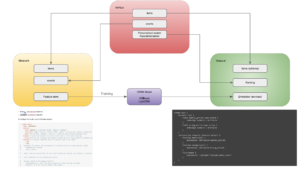
A proposal to produce a full-lifecycle LTR with Metarank Labs and Vespa.ai for WordPress

Vespa.ai is the perfect solution for personalized search and recommendations with XGBoost or LightGBM models, but it requires external code to create the models. Metarank Labs is the perfect no-code solution for training LTR models, thanks to its predefined feature store recipes, but it lacks the flexibility of pure vector search to provide perfect accurate results. So we propose to combine the two as the first no-code Learning to Rank solution that supports the full cycle: Ingest items in Metarank and Vespa Ingest events in Metarank Transform items and events with feature store recipes as yaml parameters Train models on the feature store Export the model to Vespa.ai as an internal ONNX embedder Rank/rerank the search/recommendations with ranking expressions including the trained model

How to (Easily) Configure Vespa on WordPress

One of the best ways of improving user experience on your WordPress websites is to have a speedy and accurate search. While the default search can be quite effective on websites with limited amounts of data, it’s speed can become problematic (slow) as traffic and data increases. This is why, in this case, you should replace your WordPress search with a high performance search engine. But where do you start? Vespa is an easy choice, since it is probably the one with the best price to performance ratio. Vespa.ai vector search stack for WPSOLR You can install our fully functional Vespa.ai vector search stack from GitHub, ready to work with WPSOLR.   What is Vespa.ai ? While the default WordPress search (and many other search

Wordpress search

WordPress search : Ultimate Guide

WordPress is the most widely used CMS and single handedly powers 40% of the web. If you haven’t tried it already, it is intuitive, powerful and if you use one of many hosting providers out there, you can easily set up a working website in minutes. But once you made all of your content, how do you ensure that your users can find it. For that, you need a good site search. Many types of search exist : keyword search, AI search, even personalized search. WordPress provides one by default, but it is incredibly slow and ineffective. This guide will go over the benefits of a fast and relevant search and how you could implement third party search engines easily into any WordPress or Woocommerce

vespa logo

Vespa error : “feed: got status 507”

When trying to deploy your Vespa application and index your documents, you could receive the following error :   feed: got status 507 ({"pathId":"/document/v1/mynamespace/music/docid/hardwired-to-self-destruct","id":"id:mynamespace:music::hardwired-to-self-destruct","message":"[UNKNOWN(251009) @ tcp/a9a1e3304702:19112/default]: ReturnCode(NO_SPACE, External feed is blocked due to resource exhaustion: in content cluster 'music': disk on node 0 [a9a1e3304702] is 93.9% full (the configured limit is 75.0%). See https://docs.vespa.ai/en/operations/feed-block.html) "}) for put id:mynamespace:music::hardwired-to-self-destruct: not retryable   This is because the disk space is almost full (in this case 93.9%). When the nodes reach a certain limit, the nodes block external write operations.   By default Vespa sets it’s disk space limit at 0.75 (75%).  You can increase it by adding the following lines to the ‘services.xml’ file in your Vespa application package, more precisely inside the ‘<content>’ tag :